
“I have been alone and very wretched, without friend or comrade, suffering a great deal.”
Philoctetes
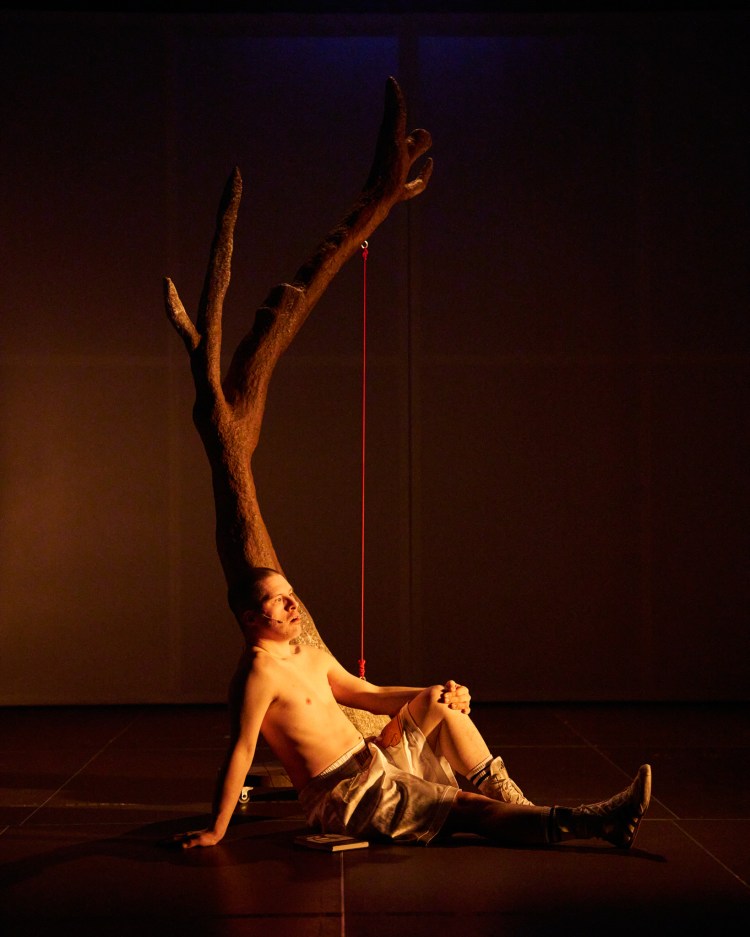
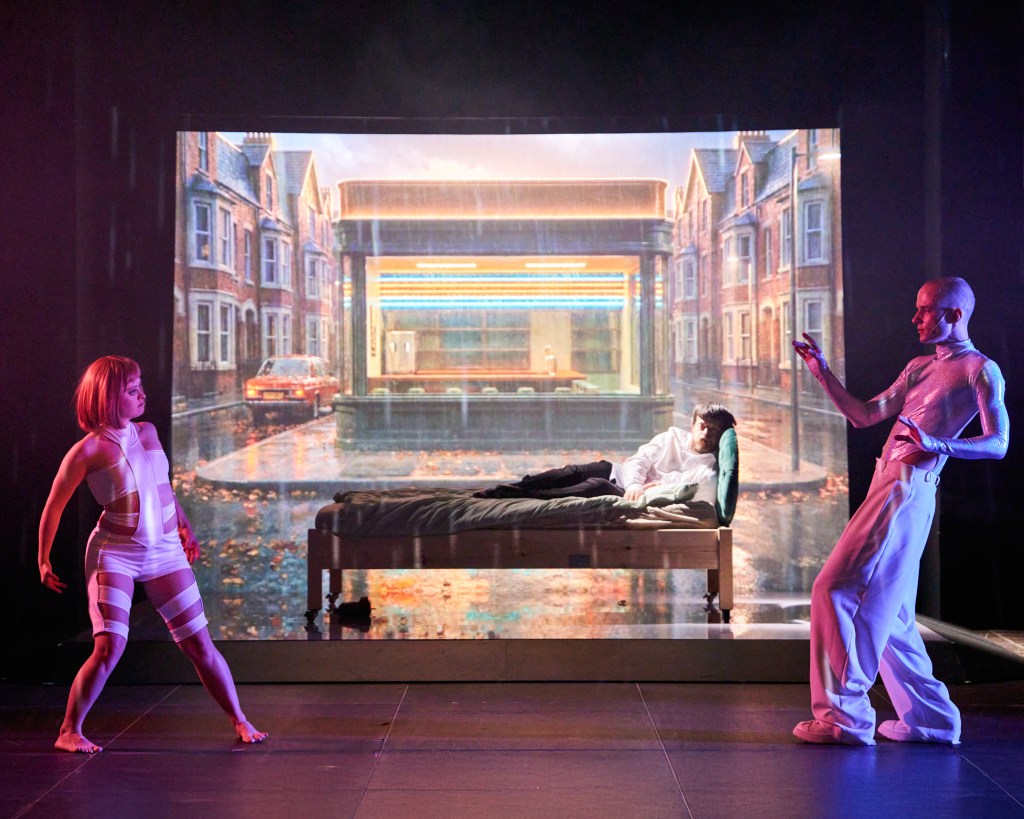
What do Juan Mann, who offered free hugs to passers-by in Sydney’s city centre in 2004[1], and American writer Laura Hillenbrand, who had stayed in bed for years due to chronic fatigue syndrome[2], have in common with 38-year-old British woman Laura Winham[3], who died of starvation in her own flat in 2017? How can these stories be narrated by Philoctetes, the hero of a play by Sophocles? Add Dr Dave Bowman and HAL 9000 from 2001: A Space Odyssey and Leeloo from The Fifth Element, and you will meet the core characters of the play Philoctetes’ Journey. The Return, directed by Justyna Wielgus, staged at the theatre TR in Warsaw from 30 November 2025. It is the result of a collaboration between the Polish MEDEP team and the acting troupe of the Teatr 21 (Centre for Inclusive Art/Theatre 21), which mainly comprises actors with disabilities. Justyna Lipko, one of the MEDEP members, wrote the play’s script and is responsible for the dramaturgy.
The mythological figure of Philoctetes, the king of Thessaly and an excellent archer, who was abandoned and condemned to a life of loneliness due to his illness, became a symbol of exclusion and suffering in Western culture. However, he also became a symbol of resilience and dignity. The fact that his lines from the 2,500-year-old epic provide an accurate commentary on contemporary crises stems from the fact that, just as in antiquity, illness, suffering, exclusion and loneliness are an integral part of our everyday lives. It is no wonder, then, that loneliness is explored in all its forms and through various lenses in this play.

The play’s narrative is framed by two iconic works: ancient Greek drama, Sophocles’ Philoctetes and mid-20th century Stanley Kubrick and Arthur C. Clarke’s 2001: A Space Odyssey. These works are 25 centuries apart but both can be viewed as focusing on confronting loneliness brought by its’ two iconic locations: deserted island and space. Although the narrative is multi-layered and non-linear, the central, recurring focus is a bed on stage. The play’s narrative merges in this way with the research reflection on horizontal aesthetics and bed activism[4] by Magdalena Zdrodowska of the Polish MEDEP team. The bed connects various characters and their life stories of loneliness or abandonment. It is where Laura Winham starves to death while struggling with mental health issues. It is also where imitators of Juan Mann sit, selling hugs as human touch is a highly sought-after commodity. Laura Hillenbrand spends her life in/on/by the bed, conducting endless interviews. Over time, however, it appears that these conversations are less a source of inspiration for her writing and more a survival strategy in isolation. The play is the result of several months of co-creative work by the theatre company Teatr 21 and TR on Sophocles’ text and the stories of real people. In this collaborative process, authors and actors with and without disabilities develop the meanings and final form of the play.
Sławomir Łotysz
Notes
- Free Hugs Campaign. https://www.freehugscampaign.org/ ↩︎
- Paul Costello, “Leaving frailty behind. A conversation with Laura Hillenbrand,” 15 August 2016, https://stanmed.stanford.edu/leaving-frailty-behind/ ↩︎
- John Pring, “Family say DWP has unanswered questions over death of disabled woman whose benefits were stopped,” 27 February 2025, https://www.disabilitynewsservice.com/family-say-dwp-has-unanswered-questions-over-death-of-disabled-woman-whose-benefits-were-stopped/ ↩︎
- Magdalena Zdrodowska, “Horizontal Aesthetics and Bed Activism: Pandemic Subversive Horizontality,” Didaskalia. Gazeta Teatralna, English Issue (2024): 107-130. DOI:10.34762/af1t-kg66. https://didaskalia.pl/en/article/horizontal-aesthetics-and-bed-activism-pandemic-subversive-horizontality ↩︎
 Media and Epidemics (MEDEP)